The Evolving Role of Packaging in Pharma
Pharmaceutical packaging has evolved from a simple protective layer to an active component in the drug lifecycle. Beyond containment, modern packaging plays a strategic role in safety, traceability, sustainability, and patient engagement. Regulatory pressure, globalized supply chains, and the rising threat of counterfeit medicines—estimated by the World Health Organization to affect a significant share of drugs in low- and middle-income markets—are driving this shift. At the same time, manufacturers face growing pressure to reduce waste and improve usability, highlighting the importance of patient-centric and sustainable packaging.
Smart pharmaceutical packaging is emerging as a key trend. Beyond electronics, recent advances focus on functional design features that enhance safety, usability, and trust. Tamper-evident packaging, child-resistant yet senior-friendly closures, and intuitive opening systems are reshaping patient interactions. These innovations support both regulatory compliance and patient-centric goals, reducing risk and improving treatment adherence well beyond the factory floor.
What Is Smart Pharmaceutical Packaging?
Smart pharmaceutical packaging incorporates digital or functional technologies to deliver benefits beyond containment. Solutions improve traceability, security, patient adherence, and supply chain visibility. Common use cases include anti-counterfeit technologies, tamper-evident packaging, and connected features supporting patient-centric strategies. Market demand is rising, driven by regulations like the EU Falsified Medicines Directive and the U.S. Drug Supply Chain Security Act.
Technologies such as RFID in pharma, QR codes, and NFC are central to smart packaging solutions. RFID enables automated identification at scale, while QR and NFC allow end users to access digital information. According to GS1 guidelines, connected packaging is increasingly seen as a foundation for data-driven supply chains rather than a standalone feature. For machinery, this translates in data handling built directly into production lines.
Key Trends in Smart Pharma Packaging
Track-and-trace systems are a dominant trend, allowing individual packs to be identified, verified, and monitored from production to dispensing. RFID, DataMatrix codes, and interoperable databases enhance visibility while reducing manual intervention. These systems are seen not just as compliance tools but as enablers of operational efficiency and recall readiness.
Anti-counterfeit technologies are increasingly sophisticated, often combining overt, covert, and digital features. Meanwhile, sustainable pharma packaging gains importance, with mono-material structures, lightweight formats, and recyclable components demonstrating that security and sustainability can coexist.
Innovations in Packaging Design
Tamper-evident packaging has evolved to include intuitive visual indicators that clearly communicate product integrity. Child-resistant mechanisms are being designed to remain accessible to elderly or mobility-impaired users, reinforcing patient-centric packaging principles.
Smart blister packs, visual indicators, and printed electronics help patients track dosing and identify missed doses. Digital labels and QR code pharma tracking link physical packaging to digital information such as instructions, reminders, or verification tools. These innovations require higher precision, inspection, and data integration capabilities in machinery, directly impacting patient adherence and operational performance.
Romaco’s Role in Advancing Smart Pharma Packaging
Romaco delivers integrated packaging helping pharma companies implement patient-centric, anti-tamper, traceable, and sustainable packaging.
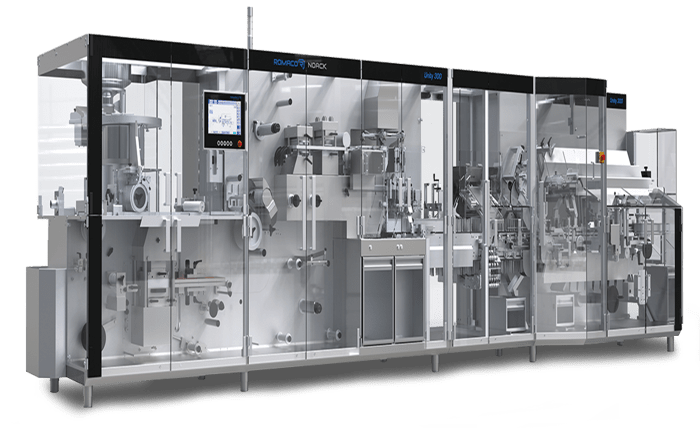
UNITY blister lines offer flexibility, precision, and high-quality output, supporting complex formats, intuitive opening systems, and anti-counterfeit features. P 91 and PC 4000 cartoners provide robust secondary packaging performance, balancing throughput, product protection, and usability.
For serialization, the PTT machine integrates with any vision system and serialization software, enabling modular application, verification, and recording of codes without compromising speed.
Tertiary packaging solutions, including PAK 130 and PAK 320 case packers, feature integrated aggregation, cameras, print-and-apply labeling, and customizable conveyors to downstream palletizing with double-station cobots. These systems streamline line architecture, reduce manual handling, and ensure data-rich aggregation for sophisticated supply chains.
Partnering with Romaco allows pharmaceutical manufacturers to deploy turnkey solutions that maintain regulatory alignment while supporting patient-centric, anti-tamper, traceable, and sustainable outcomes. Advanced technologies embedded in proven equipment platforms help companies meet today’s demands while preparing for future innovations in pharmaceutical packaging.
Explore how Romaco can help you adopt next-gen smart packaging solutions.